
Kunstgeschiedenis
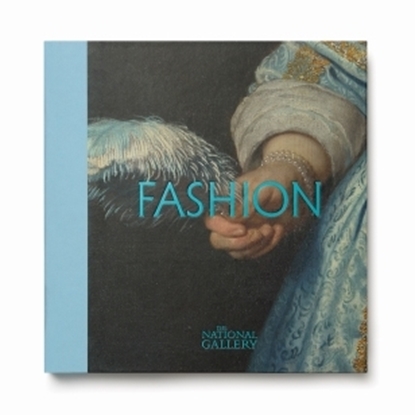
Fashion
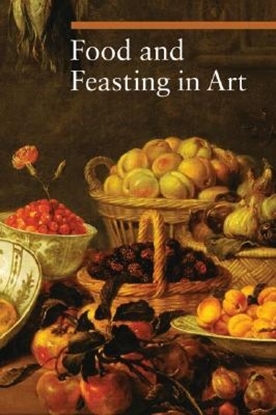
Food and Feasting in Art

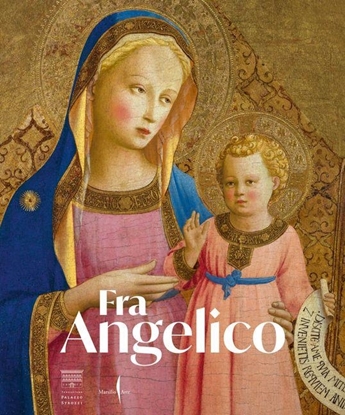
Fra Angelico
A glorious publication on the "saintly and excellent" Florentine friar and painter whose religious scenes exemplify Renaissance theories of perspective and humanism
After exploring the language of Gothic painting, the great Tuscan artist Fra Angelico enthusiastically took up the new principles of Renaissance art then emerging in Florence. This volume offers a thorough exploration of the extraordinary talent of this artist, bringing out his capacity for artistic innovation in the service of deep spiritual values.
The book also provides a comprehensive assessment of the current state of research on Angelico. Its scholarly significance is further reinforced by the unprecedented reunion of five altarpieces that have been dismantled over the centuries: the San Piero Martire Altarpiece, the San Domenico Altarpiece in Fiesole, the Compagnia di San Francesco Altarpiece in Santa Croce, the San Marco Altarpiece and the Perugia Altarpiece. While the main panels have stayed in Italy, the remaining elements are dispersed across museum collections worldwide. The volume includes critical essays, a study of the history of the Museum of San Marco and an analysis of Angelico's frescoes preserved in the Sala del Capitolo, the cloisters and the monastic cells. This is a definitive and indispensable work of reference on the artist.
Born in Vicchio di Mugello as Guido di Pietro, Fra Angelico (c. 1395–1455) joined the Dominican order as a mendicant friar. He painted several frescoes for the Convent of San Marco in Florence, including the Annunciation, and decorated Cosimo de Medici's personal room in the monastery. In his later years he was called to Rome to decorate chapels for Pope Eugene IV and then Pope Nicholas V. Of his life, Giorgio Vasari wrote: "it is impossible to bestow too much praise on this holy father, who was so humble and modest in all that he did and said and whose pictures were painted with such facility and piety."

Francis Bacon: Human Presence

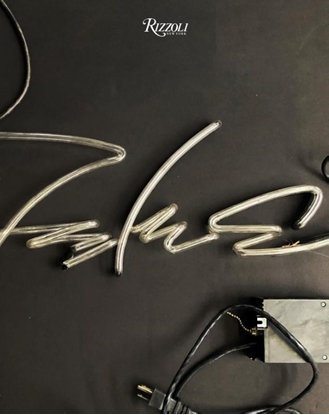
Futura : The Artist's Monograph
Having forged his graphic style painting subways in New York in the late 1970s, Futura was among the first graffiti artists to be shown in contemporary galleries in the early 1980s, where his paintings shared space with works by Keith Haring, Jean-Michel Basquiat, and Kenny Scharf. As the commercialization of street culture in the 1990s inspired collaborations with fashion and lifestyle brands, Futura's work moved toward a more refined expression of his abstract graffiti style. Commissions from era-defining brands such as A Bathing Ape, Stüssy, Supreme, and Mo' Wax saw his artwork canonized as an elemental component of the street aesthetic.
Collected here, among never-before-published reproductions of earlier paintings and drawings, is an archive of personal photography and ephemera that reveals how integral Futura has been to the evolution of street art and culture. Guided through more than forty years of work, and with interviews with key players in Futura's career, this is at once a definitive monograph of a legend of contemporary art and an indispensable chapter in the history of graffiti. Lees meer
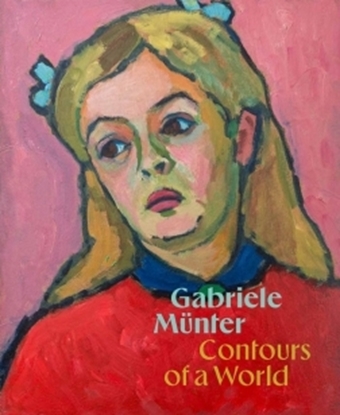
Gabriele Munter: Contours of a World
A new look at a vanguard modernist artist who reimagined the still life, landscape and portrait genres
This landmark publication coincides with the major Guggenheim New York exhibition of works by the remarkable German Expressionist Gabriele Münter. Münter’s painting practice between 1908 and 1920 is the central focus of the exhibition and accompanying book. The study also illuminates her lesser-known later work and includes significant examples of her photography taken during earlier extensive travels in the United States. Münter was notably a cofounder of Der Blaue Reiter (The Blue Rider), a loose and transnational confederation of progressive artists and other creatives, with whom she probed the expressive potential of color and the symbolic resonance of forms. Her introspective portraits during World War II capture the “new woman” and explore questions of gender identity.
Highlighting more than 90 paintings, drawings and photographs, this publication not only traces Münter’s pioneering and understudied practice but also challenges accepted historical narratives that have tended to sideline women artists. Reproductions of archival material appear alongside choice selections of the artist's sketches, prints and reverse glass paintings. Thematic texts by renowned scholars explore identity, place, belonging and the embodied experience of modernist women artists during this period.
Gabriele Münter (1877–1962) was at the forefront of the German avant-garde in the early 20th century and exhibited extensively at galleries and salons throughout Europe during her lifetime. Along with her artistic colleague and one-time partner, Vasily Kandinsky, Münter was a founder of the influential Expressionist group of artists, Der Blaue Reiter.

Gainsborough
Gainsborough is one of the most appealing artists of the eighteenth century. Renowned for such elegant portraits as The Blue Boy and Countess Howe, he also pioneered a new form of landscape with a moody sensibility that prefigured the Romantic movement. He was a brilliant draftsman, and his art is full of inventiveness and visual delight.
William Vaughan draws on recently discovered material to provide a fresh perspective on both the life and art of this master. He shows how closely Gainsborough's innovative manner can be connected to social and political developments in Britain, in particular the celebration of original genius in a time of burgeoning entrepreneurial commercialism. Above all, he demonstrates how, beneath the artist’s charm, there lay a bedrock of shrewd observation and pictorial intelligence that gives his work a value for all time.
Lees meer
Gauguin
Artist Paul Gauguin achieved a high public profile during his lifetime and was one of the first artists of his generation to achieve international recognition. But his prominence has always been tangled up with the dramatic and problematic events of his life—his self-imposed exile on a remote South Sea island and his turbulent relationships with his peers—as with the appeal of his art.
In this revised and updated edition, art historian Belinda Thomson gives a comprehensive and accessible account of the life and work of one of the most complicated artists of the late nineteenth century. Gauguin’s painting, sculpture, prints, and ceramics are discussed in the light of his public persona, his relations with his contemporaries, his exhibitions, and their critical reception. His private world, beliefs, and aspirations emerge through his extensive cache of journals, letters, and other writings. Fully illustrated in color, and drawing on the new, more global conversation surrounding the artist, Gauguin is the definitive volume on this controversial and often contradictory figure.
Lees meer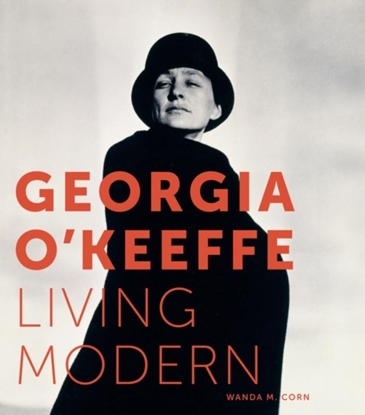
Georgia O'Keeffe
This book explores how Georgia O’Keeffe lived her life steeped in modernism, bringing the same style she developed in her art to her dress, her homes, and her lifestyle. Richly illustrated with images of her art and views of the two homes she designed and furnished in New Mexico, the book also includes never before published photographs of O’Keeffe’s clothes. The author has attributed some of the most exquisite of these garments to O’Keeffe, a skilled seamstress who understood fabric and design, and who has become an icon in today’s fashion world as much for her personal style as for her art. As one of her friends stated, O’Keeffe "never allowed her life to be one thing and her painting another." This fresh and carefully researched study brings O’Keeffe’s style to life, illuminating how this beloved American artist purposefully proclaimed her modernity in the way she dressed and posed for photographers, from Alfred Stieglitz to Bruce Weber. This beautiful book accompanies the first museum exhibition to bring together photographs, clothes, and art to explore O’Keeffe’s unified modernist aesthetic.
This book accompanies the show at the Peabody-Essex Museum, Georgia O’Keeffe: Art, Image, Style. Lees meer
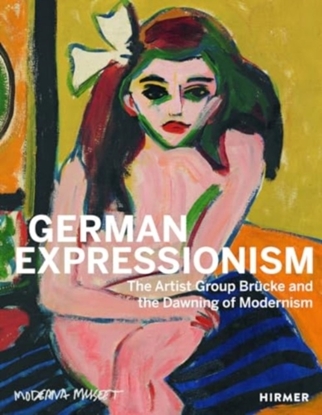
German Expressionism
The artist group Brücke is Germanys most important contribution to international modernism. The group was formed in Dresden in 1905 by four young architecture students: Ernst Ludwig Kirchner, Otto Bleyl, Erich Heckel, and Karl Schmidt-Rottluff. Together they developed a painting style with vivid colors, simplified forms, and large color fields that express internal feelings rather than reproducing an external reality. The group disbanded in 1913, but their collaboration and marketing strategies have been inspirational for several generations of artists.
These young artists wanted to renew art and life in the German Imperial Empire and break with the prevailing moral norms of the day. They were interested in topics like man and nature; the naked body; portraits; self-portraits; the merging of life and art; and life in the vibrant metropolis of Berlin. In a time like the present, when a young generation feels the need for a new way of living, thinking, and organizing, reflecting on Brücke feels particularly relevant.
Lees meer

German Expressionism: Paintings at the Saint Louis Art Museum
The Saint Louis Art Museum is home to one of North Americas largest and most comprehensive collections of German Expressionist paintings. Rediscover a defining movement of modern art through this original study of works by twenty-five artists who span its famously wide arc.
German Expressionism: Paintings at the Saint Louis Art Museum is the first publication on the Saint Louis Art Museums internationally renowned collection of German Expressionist art, which includes major works by the movements leading artists and lesser-known figures rarely seen outside of Germany. Engaging entries delve into the paintings histories, from their production to their arrival in St. Louis. An introduction traces the collections origins to the flood of Expressionist art that entered the United States during World War II. What emerges is a new account of a pivotal era in modern art, exploring the stories behind exceptional German Expressionist paintings.
Lees meer
Getty Publications – Symbols and Allegories in Art

Global Art
Global Art introduces some of the most significant art movements of the twentieth and early twenty-first centuries that have challenged the status quo. Featuring fifty artistic developments from every continent, this volume covers movements born of decolonization, marginalization, and conflict. Ranging from the Saqqakhaneh artists of Iran to the Stridentists of Mexico, Experimental Workshop of Japan to America’s AfriCOBRA, it chronicles groups that have empowered and given voice to their members.
Packed with bold and illuminating illustrations, the book demonstrates the distinct but connected roles of global movements in creating cross-cultural dialogues in today’s art world. Journalist Jessica Lack provides historical context for each art movement, key cultural events, and interconnections, bringing to life the protagonists in each movement’s evolution.
Lees meer