Poëzie

Collected Poems
This comprehensive volume contains all Sylvia Plath's mature poetry written from 1956 up to her death in 1963. The poems are drawn from the only collection Plath published while alive, The Colossus, as well as from posthumous collections Ariel, Crossing the Water and Winter Trees.
The text is preceded by an introduction by Ted Hughes and followed by notes and comments on individual poems. There is also an appendix containing fifty poems from Sylvia Plath's juvenilia.
This collection was awarded the 1981 Pulitzer Prize for poetry.
'For me, the most important literary event of 1981 has been the publication, eighteen years after her death, of Sylvia Plath's Collected Poems, confirming her as one of the most powerful and lavishly gifted poets of our time.' A. Alvarez in the Observer
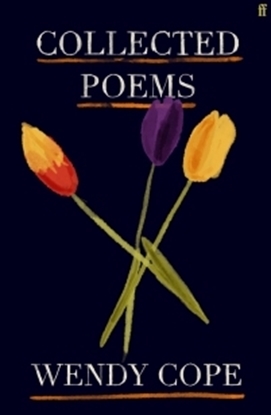
Collected Poems
SHORTLISTED FOR THE WALCOTT PRIZE
‘Her poetry stands unsurpassed in its popularity and technical accomplishment – there’s no better contemporary writer of forms such as the triolet – and in the wit, acuity and seriousness of purpose with which she shows us what it is to be human.’ Guardian
This volume comprises the full poetic works of one of our wittiest, most beloved writers, and includes many previously uncollected poems.
When Making Cocoa for Kingsley Amis was published in 1986, Wendy Cope became that rarest of creatures: a celebrated poet who was also a best-seller. Her artful combination of insight and wit made an extraordinary impact in poems that cocked a gentle snook at the pomposity of a literary world hitherto dominated by men.
Through four further collections, Cope has continued to delight her readers while finding a whole new generation of enthusiasts when her poem ‘The Orange’ went viral. Together these poems catalogue the desires and fears that underlie our ordinary existences – love and heartbreak, disappointment and a hard-won capacity to find happiness, even if only in the form of a poem.. In their profound attention to and encapsulation of the everyday, these poems serve to make our own lives the more remarkable and memorable. Collected Poems celebrates a lifetime’s achievement by a poet who has been original and distinctive from the very start, and provides the perfect accompaniment to the trials, tribulations and joys of our all too human lives.
This collection also features Nick Garland’s original illustrations for The River Girl (1991).
‘Her poetry stands unsurpassed in its popularity and technical accomplishment – there’s no better contemporary writer of forms such as the triolet – and in the wit, acuity and seriousness of purpose with which she shows us what it is to be human.’ Rishi Dastidar, Guardian
‘We can love Wendy Cope’s words . . . for the rhymes they reveal but also for the sad truths they speak.’ Adam Gopnik, New Yorker
‘One has to go back to Byron to find a poet as consistently witty, wide-ranging and technically outstanding as Cope.’ Los Angeles Review of Books
‘We need not wonder at Wendy Cope’s continued, wide appeal. She writes poems that people want to read, and this is how poems survive.’ Literary Review
‘Wit and heart? Cope’s fans should rest assured there are enough gems here with both.’ Telegraph
‘Wendy Cope’s real strength lies not in charm or insight (she has buckets of both) but in the pitch-perfect exactitude of her writing.’ Sunday Times
‘Her poems are moving, memorable, funny, clever; they alert readers to what it means to be human.’ PN Review
'Any book of [Cope's] work is a national treasure chest ... her work has, with care and precision, given us pathways to negotiate the world ... Her Collected Poems is as human as an embrace.' Ian McMillan, BBC Radio 4's The Verb





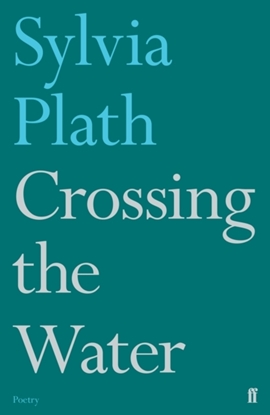
Crossing the Water
Crossing the Water and Winter Trees contain the poems written during the exceptionally creative period of the last years of Sylvia Plath’s life. Published posthumously in 1971, they add a startling counterpoint to Ariel, the volume that made her reputation. Readers will recognise some of her most celebrated poems – ‘Childless Woman’, ‘Mirror’, ‘Insomniac’ – while discovering those still overlooked, including her radio play Three Women. These two extraordinary volumes find their place alongside The Colossus and Ariel in the oeuvre of a singular talent.
'Nearly all the poems here have the familiar Plath daring, the same feel of bits of frightened, vibrant, indignant consciousness translated instantly into words and images that blend close, experienced horror and icy, sardonic control.' Alan Brownjohn, New Statesman

Crow
Crow was Ted Hughes's fourth book of poems for adults and a pivotal moment in his writing career. In it, he found both a structure and a persona that gave his vision a new power and coherence. A deep engagement with history, mythology and the natural world combine to forge a work of impressive and unsettling force.
'English poetry has found a new hero and nobody will be able to read or write verse now without the black shape of Crow falling across the page.' Peter Porter