Was there a beginning of time? Could time run backwards? Is the universe infinite or does it have boundaries? These are just some of the questions considered in an internationally acclaimed masterpiece by one of the world's greatest thinkers. It begins by reviewing the great theories of the cosmos from Newton to Einstein, before delving into the secrets which still lie at the heart of space and time, from the Big Bang to black holes, via spiral galaxies and strong theory. To this day A Brief History of Time remains a staple of the scientific canon, and its succinct and clear language continues to introduce millions to the universe and its wonders. Lees meer
The ultimate must-have science book. A multimillion copy bestseller. A popular book about the nature of the universe, written for the general reader by one of the world's greatest ever thinkers.
A Brief History of Time poses questions such as:
Was there a beginning of time? Could time run backwards? Is the universe infinite or does it have boundaries?
This internationally acclaimed masterpiece begins by reviewing the great theories of the cosmos from Newton to Einstein, before delving into the secrets which still lie at the heart of space and time, from the Big Bang to black holes, via spiral galaxies and strong theory.
To this day A Brief History of Time remains a keystone of the scientific canon, and its succinct and clear language continues to introduce millions to the universe and its wonders.
This revised edition includes updates from Stephen Hawking with his most recent thoughts about the No Boundary Proposal and with information about dark energy, the information paradox, eternal inflation, the microwave background radiation observations, and the discovery of gravitational waves.
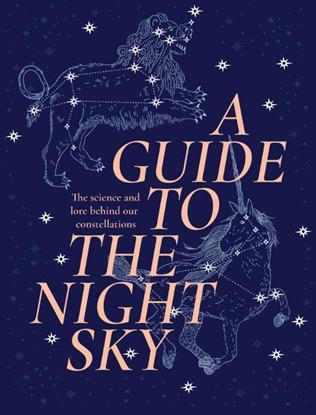
Explore the wonder of the eighty-eight constellations in our universe through this beautifully illustrated guide.
Across human cultures and history, we have looked up to the heavens and discovered the stars, from the well-known Aries Orion to the lesser-known Volans and Triangulum. Each cluster of stars has its own story, both mythic and scientific.
With A Guide to the Night Sky, learn practical tips on how to view the skies (with and without telescopes), then put them into action to start your stargazing journey. Read about the first stargazers and how they have been interpreting the constellations for thousands of years. Take a crash course in the galaxy and learn about deep-sky objects of all varieties. Then settle in to discover the eighty-eight officially recognized constellations and learn about their lore, size, location, and all about their brightest stars. Lees meer
De gloednieuwe ANWB Basis natuurgidsen helpen elke natuurliefhebber op weg! Met Sterrenkunde lees en leer je alles over ruim 50 bekende sterrenbeelden.
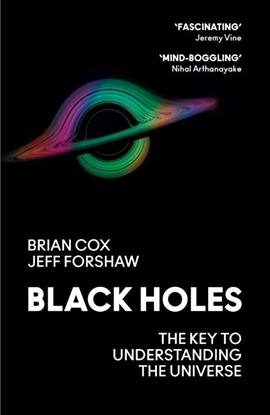
A Brief History of Time for the 21st CenturyAt the heart of our galaxy lies a monster so deadly, not even light can escape its grasp. Its secrets lie waiting to be discovered. It’s time to explore our universe’s most mysterious inhabitantsBlack HolesAt the heart of the Milky Way lies a supermassive black hole 4 million times more massive than our Sun. A place where space and time are so warped that light is trapped if it ventures within 12 million km. According to Einstein, inside lies the end of time. According to 21st-century physics, the reality may be far more bizarre.Black holes lie where the most massive stars used to shine and at the edge of our current understanding. They are naturally occurring objects, the inevitable creations of gravity when too much matter collapses into not enough space. And yet, although the laws of nature predict them, they fail fully to describe them.Black holes are places in space and time where the laws of gravity, quantum physics and thermodynamics collide. Originally thought to be so intellectually troubling that they simply could not exist, it is only in the past few years that we have begun to glimpse a new synthesis; a deep connection between gravity and quantum information theory that describes a holographic universe in which space and time emerge from a network of quantum bits, and wormholes span the void.In this groundbreaking book, Professor Brian Cox and Professor Jeff Forshaw take you to the edge of our understanding of black holes; a scientific journey to the research frontier spanning a century of physics, from Einstein to Hawking and beyond, that ends with the startling conclusion that our world may operate like a giant quantum computer. Lees meer
Comet presents the amazing story of the Rosetta space probe and its interstellar voyage to the comet Tchoury. Its mission – to find clues to the origins of our solar system and the emergence of life on Earth. Following a ten-year voyage and a journey spanning millions of kilometres through our Solar System, the Rosetta entered the comet’s orbit. Its lander, Philae – a miniature science laboratory – landed directly on Tchoury’s surface and was able to take the photographs presented here. This triumph of scientific endeavour brought back a raft of incredible new photographs, the best of which are featured here. The book is built around the various phases in Rosetta’s journey: leaving Earth, breaching its atmosphere and watching the lights of home recede; skirting the Moon and coming close to Mars; plunging into the cosmos’ starry void and approaching the comet; and, finally, landing on Tchoury. The photographs are accompanied by a text that reflects on the objectives of the mission and the accomplishment of such a technological feat for humanity. Detailed captions provide the reader with accessible scientific information, enabling them to get to the heart of the subject. Lees meer
Fotoboek over de kosmos met ruimtebeelden van nevels en sterrenstelsels, afkomstig van onder meer de Hubble- en James Webb-telescopen en van amateurastronomen. De tekst beschrijft recente astronomische ontdekkingen op heldere wijze en combineert beeldmateriaal met uitleg over het heelal. De inhoud draait om astronomie, ruimtewaarneming en de visuele en wetenschappelijke verkenning van het universum. Lees meer