
Theologie algemeen
150 psalmen vrij
2 Samuël deel 1

3-pak Niet te geloven, God en de moraal, In hemelsnaam
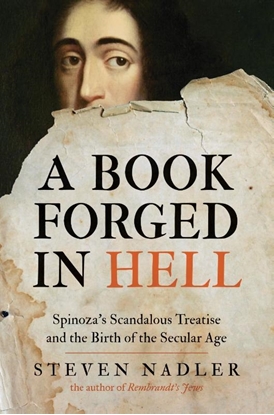
A Book Forged in Hell
The story of one of the most important—and incendiary—books in Western history
When it appeared in 1670, Baruch Spinoza's Theological-Political Treatise was denounced as the most dangerous book ever published—"godless," "full of abominations," "a book forged in hell . . . by the devil himself." Religious and secular authorities saw it as a threat to faith, social and political harmony, and everyday morality, and its author was almost universally regarded as a religious subversive and political radical who sought to spread atheism throughout Europe. Yet Spinoza's book has contributed as much as the Declaration of Independence or Thomas Paine's Common Sense to modern liberal, secular, and democratic thinking. In A Book Forged in Hell, Steven Nadler tells the fascinating story of this extraordinary book: its radical claims and their background in the philosophical, religious, and political tensions of the Dutch Golden Age, as well as the vitriolic reaction these ideas inspired.
It is not hard to see why Spinoza's Treatise was so important or so controversial, or why the uproar it caused is one of the most significant events in European intellectual history. In the book, Spinoza became the first to argue that the Bible is not literally the word of God but rather a work of human literature; that true religion has nothing to do with theology, liturgical ceremonies, or sectarian dogma; and that religious authorities should have no role in governing a modern state. He also denied the reality of miracles and divine providence, reinterpreted the nature of prophecy, and made an eloquent plea for toleration and democracy.
A vivid story of incendiary ideas and vicious backlash, A Book Forged in Hell will interest anyone who is curious about the origin of some of our most cherished modern beliefs.

A Calendar of Wisdom
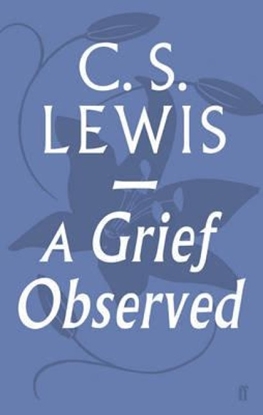
A Grief Observed
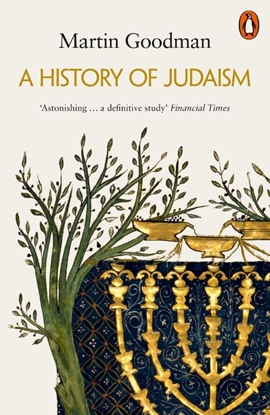
A History of Judaism
Judaism is by some distance the oldest of the three Abrahamic religions. Despite the extraordinarily diverse forms it has taken, the Jewish people have believed themselves bound to God by the same covenant for more than three thousand years. This book explains how Judaism came to be and how it has developed from one age to the next, as well as the ways in which its varieties have related to each other.
A History of Judaism ranges from Judaism's inception amidst polytheistic societies in the second and fi rst millennia, through the Jerusalem Temple cult in the centuries preceding its destruction, to the rabbis, mystics and messiahs of medieval and early modern times and, finally, the many expressions of the modern and contemporary Jewish worlds. Throughout, Martin Goodman shows how Judaism has been made and remade over the millennia by individuals as well as communities, and shaped by the cultures and philosophies in which Jews have been immersed.
It becomes a truly global story, spanning not only the Middle East, Europe and North Africa, but also China, India and America, andone that untangles the threads of doctrinal and philosophical debate running through Judaism's history. Goodman demonstrates that its numerous strains have often adopted incompatible practices and ideas - about the authority of ancestral traditions, the meaning of scripture, the nature of God, the afterlife and the End of Days - but that disagreement has almost always been tolerated without schism.
There have been many histories of the Jewish people but remarkably few attempts to describe the history and evolution of Judaism itself. This panoramic book, the fi rst of its kind in almost seventy years, does glorious justice to the inexhaustible variety of one the world's great religions. Lees meer
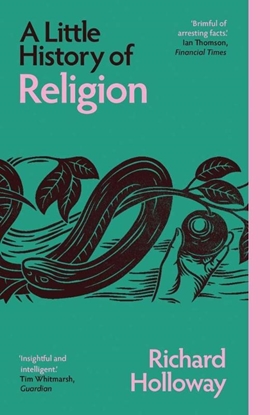
A Little History of Religion

A Monk's Guide to a Clean House and Mind
Live clean. Feel calm. Be happy.
We remove dust to sweep away our worldly cares. We live simply and take time to contemplate the self, mindfully living each moment. It's not just monks that need to live this way. Everyone in today's busy world needs it.
In Japan, cleanliness is next to enlightenment. This bestselling guide by a Zen Buddhist monk draws on ancient traditions to show you how a few simple changes to your daily habits - from your early morning routine to preparingfood, from respecting the objects around you to working together as a team -will not only make your home calmer and cleaner, but will leave you feeling refreshed, happier and more fulfilled. Lees meer
