Kunstgeschiedenis

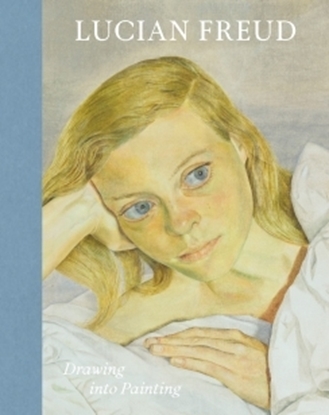
Lucian Freud
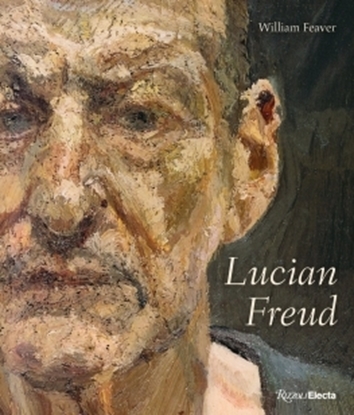
Lucian Freud
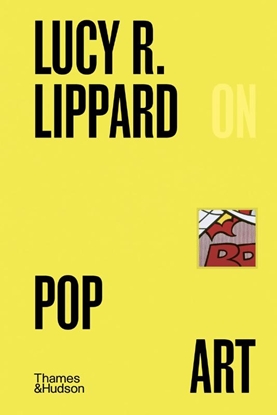
Lucy R. Lippard on Pop Art
Pop Art epitomized the free spirit of the 1960s, blending carnival-like qualities with bold colors and monumental scale, but based on a tough, no-nonsense, no-refinement standard appropriate to its time. Renowned art critic and curator Lucy Lippard's classic, contemporaneous study enriches our understanding of this groundbreaking art movement.
Across three chapters, the author first outlines the phenomenon of Pop Art, its antecedents and related styles ranging from folk art, Surrealism and Dada as well as the work of key artists such as Robert Rauschenberg and Jasper Johns. She then focuses on Pop Art in New York, discussing key iconic figures including Claes Oldenburg, Jim Dine, Roy Lichtenstein, James Rosenquist, Andy Warhol, and Tom Wesselmann, who appropriated advertising, comics, and the conventions of commercial art and its specific techniques. Finally, Lippard provides an extensive overview of Pop Art's impact and evolution across Europe, particularly in France, Germany, Italy, and Canada, and so touches upon the work of Christo, Mimmo Rotella, and many others, including Niki de Saint Phalle and Joyce Weiland, whose work are now experiencing a resurgence of interest.
Lees meer

Lumumba in the Arts
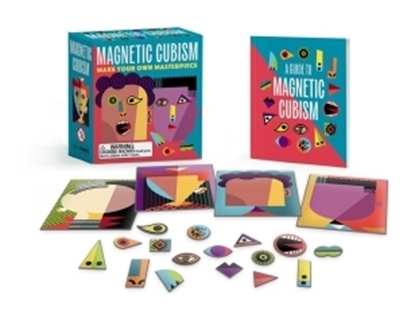
Magnetic Cubism
- Interactive Magnet Set: Includes 4 blank portraits and 16 cubist inspired facial features ready to build your own Cubist works of art
- Illustrated Mini Book Included: Learn more about Cubism in the 32-page, 2-1/2″ x 3″ illustrated mini book
- A Unique Gift: A perfect humorous and creative gift for those keep up with art history or want to vandalize their favorite photos of family and friends
Magritte
Published in association with a major survey of the work of the pioneering Belgian surrealist artist
René Magritte is renowned for his thought-provoking and enigmatic paintings that challenge perceptions of reality. His exploration of the subconscious and the juxtaposition of ordinary objects in surreal contexts have left an indelible mark on the art world, influencing generations of artists and thinkers. Magritte provides an engaging, accessible, and in-depth survey of the artist’s practice, giving insights into the evolution of his art. It features reproductions of more than one hundred artworks drawn from public and private collections alongside rarely seen archival materials, commercial work, and photography. The images are accompanied by four essays and a transcript of an interview originally recorded for Belgian television in 1965, which together offer nuanced perspectives on the aesthetic foundations of Magritte’s work while also considering the social and artistic context for his practice. An essay by curator Nicholas Chambers leads us through the arc of the exhibition, revealing the artist’s extraordinary capacity for innovation and reinvention. Other essays focus on the artist’s milieux during the formative 1920s, the reception and promotion of his art outside of Europe, and his remarkable use of humor. An extensive, illustrated chronology charts the artist’s life and career.

Make Your Own Mondrian
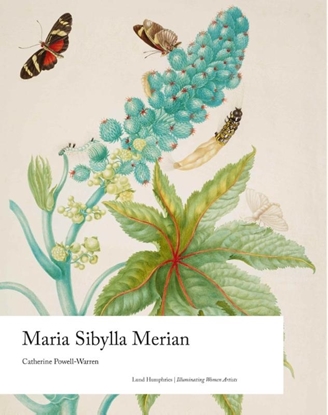
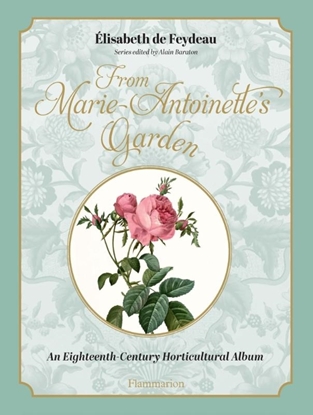
Marie-Antoinette's Garden
Plants, flowers, and trees were Marie-Antoinette’s passion; she transformed the Petit Trianon’s gardens into an enchanted refuge from the oppressive shackles of Versailles. Based on archival documents, this book meanders through Marie-Antoinette’s estate as the queen herself would have walked it: traversing hyacinths, buttercups, and anemones in the French Gardens, via winding paths in the Anglo-Chinese Gardens, through the conifers of the Belvedere Gardens where fabulous nocturnal parties were hosted, past the entrancing aromas of the shrubs surrounding the Temple of Love, to the wildflowers of the Garden of Solitude. This fascinating reconstruction, which plunges the reader into the eighteenth century, includes descriptions of the cosmetic and medicinal uses of the garden’s plants, anecdotes from the royal court, and watercolors of the herbarium. Lees meer
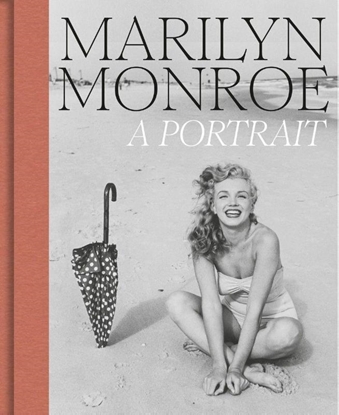
Marilyn Monroe: A Portrait
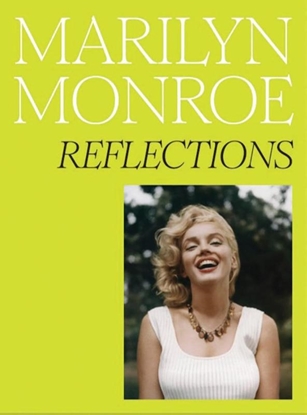
Marilyn Monroe: Reflections
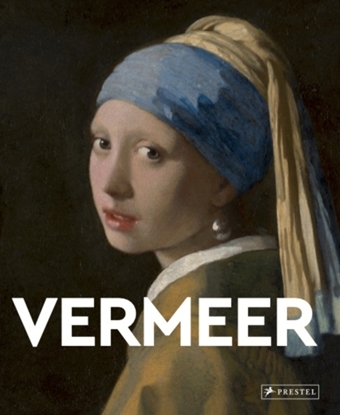
Masters of Art Vermeer
Highlighted by domestic scenes and witty allegories that fuse the ordinary with the extraordinary, Vermeer’s luminous paintings have captivated and inspired art enthusiasts for centuries. This book spotlights dozens of his works with stunning reproductions that enable readers to appreciate his mastery of light and shadow, meticulous brushwork, his extraordinary gift for capturing human emotion on canvas, and his innovative use of optical devices. An introductory essay provides biographical background, examines Vermeer’s work in the context of the Dutch Golden Age of painting, and explores his enormous influence on modern artists and popular culture. Lees meer
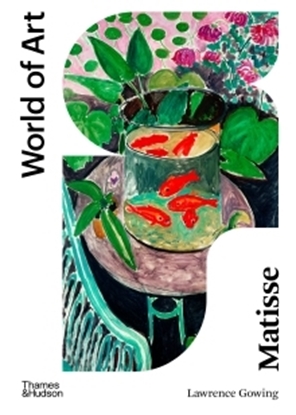
Matisse
The work of Henri Matisse has been both a profound inspiration to his successors and a source of infinite enjoyment to all who love art. Yet the apparent spontaneity of his color and ease of imagery were the fruit of a lifetime’s arduous labor; the simplicity of his compositions the result of a formidable intelligence.
In this updated edition of Lawrence Gowing's 1985 study, he takes readers through Matisse’s career, assessing his influence on the art that has followed him, and looking closely at Matisse’s own achievements. The detailed discussion of individual works reveals the subtlety and complexity of one of the greatest masters of all time. From the modest realism of his first paintings to the grandeur of his gouaches cut out to create his signature masterpieces, this book follows Matisse’s artistic development through the decades. At the age of twenty, Matisse was employed as a lawyer’s clerk and he came to art relatively late, however, in the end, his artistic career would last sixty years.
Reproducing his art in full color, this book examines the works that defined his career and secured his legacy as an artist.
Lees meer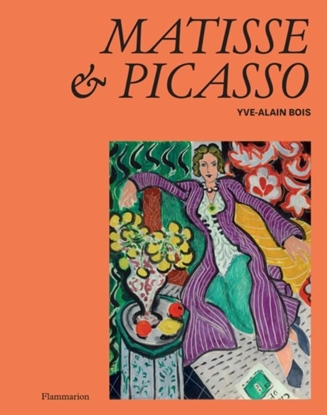
Matisse and Picasso
Fiercely competitive, Matisse and Picasso engaged in one of the most formidable creative dialogues in the history of art. This volume portrays the intertwined evolution of the two giants of modern art as if it were an ongoing chess game between two masters. They shared extraordinarily powerful dialogue during their early careers, and their unique partnership blossomed from the 1930s on, when the artists, who had grown distant for more than a decade, reconnected. They developed a mutual creative appreciation, which they translated into their own work. During the war years, their geographic separation only spurred them to reflect even more on each other’s work; their artistic sparring resumed. In the postwar period—the most poignant in their long friendship—they often met and exhibited together. But Picasso’s greatest tribute to Matisse would come in the series of paintings he realized shortly after his friend’s death; the long rivalry transformed into a deep and melancholic mourning. Beautifully reproduced, including two-color page edging, with historical demonstration supported by striking visual juxtapositions of works by the two artists, this study is a major contribution to the history of twentieth-century art. Lees meer
Matisse: The Books