
Kunstgeschiedenis
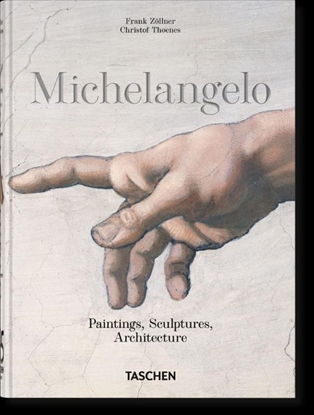
Michelangelo
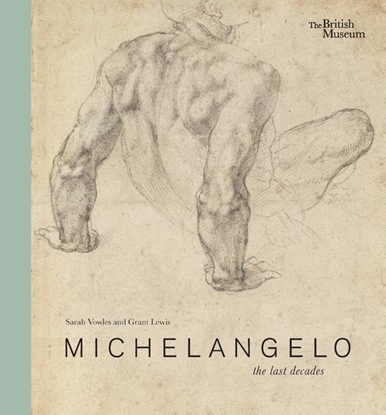
Michelangelo: the last decades
Shortlisted for Exhibition of the Year at the Apollo Awards 2024
Michelangelo Buonarroti (14751564) was one of the greatest artists of the Renaissance. He was not the isolated, tortured genius of artistic myth, but a man who maintained a close circle of friends and associates into old age. He developed collaborative working relationships with younger artists, thereby maintaining his fame and reputation even as he aged, relinquishing the hardest physical work to others. His late drawings offer a powerful insight into his psychology, reflecting his Catholic faith, his commanding intellectual engagement, and his hope for eternal life.
Michelangelo reimagined the iconography of religious art to create hugely influential compositions of key moments in Christian faith, such as the Crucifixion, the Last Judgement and the Pietà (or Lamentation). He was involved in designing several significant sites in Rome at this time including his key architectural project, the immense challenge of rebuilding St Peters, at the very heart of Christianity. His role as an architect is explored through beautiful drawings, highlighting his range as a designer. Alongside his major commissions he created deeply personal drawings revisiting earlier compositions to explore intensely moving Crucifixions that served as spiritual meditations on Christs death and offered the hope of salvation for an elderly man facing the end of his own long life.
Built on the firm foundations of the British Museums extraordinary collection of drawings, his work is explored alongside his personal relationships to consider the transformation of Michelangelo into the towering figure of artistic genius known today. Lees meer


Modern Art
The first in the series of essential introductions to art, Modern Art guides the reader through individual movements from Impressionism to Conceptual Art, situated within five broader chronological eras. Starting with Impressionism in 1860, art historian Amy Dempsey explains the essentials of Modernism, the postwar New Disorder, and beyond.
Carefully arranged material explores seventy essential topics of modern art in a practical and easy-to-navigate structure. Each boldly designed topic feature includes a clear definition; a list of key artists, attributes, media, and collections; and expertly curated illustrations with explanatory captions. A reference section includes a useful glossary of modern art terms.
Lees meer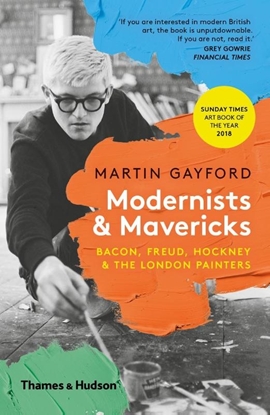
Modernists & Mavericks
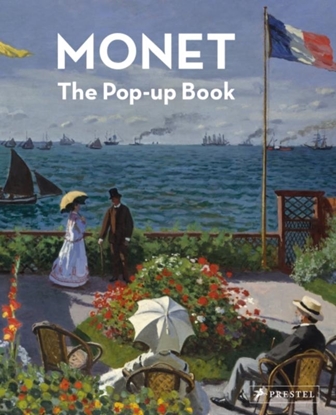
Monet
One of the joys of a Monet painting is the sense of being fully immersed in a beautiful setting. Now fans of the great artist have an intriguing new way to dive into five of his most enduring paintings: Garden at Sainte-Adresse, Poppy Field, Waterlilies and Japanese Bridge, The Artist’s House at Argenteuil, and The Bridge at Argenteuil.
Each spread opens as a flat layout with a brief description of the painting and its historical context. As readers pull down the explanatory panel, a three-dimensional rendering pops up, and Monet’s exquisitely detailed flowers, waterlilies, clouds, trees, and people come alive.
Whether readers are appreciating Monet’s masterful use of color, brushstrokes, and light and shadow, or merely savoring the pleasures of the French countryside, this meticulously crafted and engineered book offers a thrilling new way to experience the artistic genius of this Impressionist icon. Lees meer

Monet and the Impressionist Cityscape
In 1867, Monet (18401925) turned his back on tradition when he focused on the bustling life of Paris from the balcony of the Louvre. He was fascinated by the present in the growing French capital rather than focusing on the old masters. In a series of three paintings, he created a new pictorial topic.
Monets cityscapes of Saint-Germain-lAuxerrois, the Jardin de lInfante, and the Quai du Louvre are considered to be the earliest Impressionist city views. In them, he casts a completely new artistic eye over the modern metropolis being rebuilt by Haussmann. By doing so, he also inspired artists like Caillebotte and Pissarro to create their own cityscapes.
Monet and the Impressionist Cityscape reveals a new subject born, in all its beauty, through the example of Monets three principal works, as well as others by famous Impressionist and Postimpressionist artists. Lees meer

Monet's Trees
The book is divided into five main chapters, each focusing on a different theme: Monet’s earliest drawings and paintings of trees; his atmospheric use of rivers and coastlines from England to Italy; the fields, farmlands, and orchards of France; parks and gardens in both the city and the countryside; and his muted depictions of trees in winter. Skea’s introduction draws together these threads, putting them in the context of Monet’s œuvre as a whole and tracing his artistic development. Lees meer
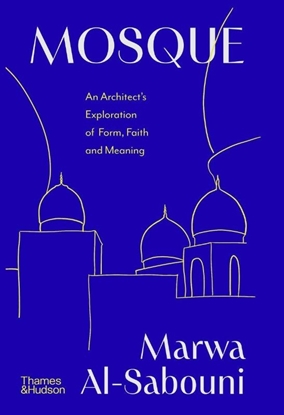
Mosque
Today, there are an estimated 3.6 million mosques around the world, which vary enormously in shape, size, and design. Told from an architect's perspective, this book offers an illuminating account of mosques—from the history and setting of significant structures to reflections on identity, modernity, and aesthetics. Elegant line drawings provide easy-to-digest information on the mosque's form, function, and features.
The mosque lies at the heart of any Islamic city—a place for group prayer, serenity, and spiritual connection. Its exterior serves as a symbol of faith, a landmark, and a point of gathering. Since the first mosque was built by the Prophet Muhammad in Medina in 622 CE, mosques have been spaces where worship and social life flourish side by side.
In this book, Syrian architect and author Marwa Al-Sabouni shares her personal experiences and reflections to bring readers inside the mosque to understand its spiritual meaning, social significance, and enduring cultural value. The role of any religious building is essentially social: worship otherwise can be practiced at home, in solitude.
This is not simply a study of architectural form, but an exploration of the mosque's meaning and essence. The chapters examine the mosque through diverse lenses—from society to the environment, art to modernity—and conclude with a powerful reflection on how mosques might help rebuild Syria, scarred by decades of war but now entering a new period of hope, however fragile.
Lees meer
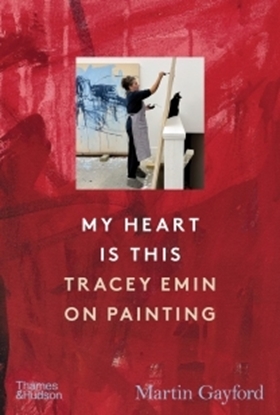
My Heart is This
Known for her raw and irreverent artwork, Tracey Emin is one of the most widely admired artists working today. In a vivid and intimate portrait of her life and work, in her own words through conversation with author and art critic Martin Gayford, Tracey Emin reflects on painting—how she approaches it, why it matters to her, and how it connects to her life—and how everything has changed since her cancer diagnosis four years ago.
Richly illustrated with photographs of the artist and her work, this book is a beautifully captured record of Tracey Emin about her inspirations, her working environment, and her relationship with other artists from the past and present.
"Drawing is an extension of the soul. You have a vision in your mind, then it comes through your hand, out onto the paper, and back into your mind again. It’s a very good therapeutic exercise. It’s quite cleansing. There’s alchemy involved."
Offering a uniquely personal insight into the artist’s extraordinary life and career, Emin expresses herself in her characteristically frank confessional style that is so familiar to anyone who has seen her paintings. This is Tracey Emin on her own terms: on learning to paint, how to live her life after cancer, and relearning why painting matters above everything else.
Lees meer
My Morandi
One of the most beloved and critically acclaimed artists of the twentieth century, Giorgio Morandi painted serial and permutational arrangements of everyday objects that elevated the quotidian into the sublime. In 1940, he struck up a decades-long friendship with entrepreneur, musicologist, art historian, and collector Luigi Magnani.
My Morandi is the first full-length English translation of Magnani’s memoir reflecting on his bond with the artist and his long-standing academic and personal interest in Morandi’s paintings. Magnani recounts the artist’s aloofness from artistic trends and his dedication to painting for a small, discerning audience. He locates Morandi within the art-historical canon as well as chronicles their artistic and intellectual kinship, which led to a unique, rich collection of Morandi’s work at Magnani’s villa in Mamiano, now the Magnani Rocca Foundation. Magnani’s personal collection of Morandi’s work was on view at David Zwirner, New York, in 2025. Originally published in 1982 in Italian, this memoir is accompanied by a new preface by curator and scholar Alice Ensabella and an introduction by Stefano Roffi, director of the Magnani Rocca Foundation. Lees meer
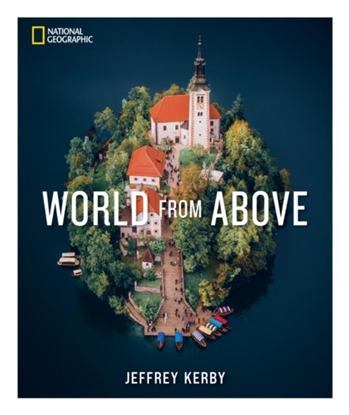
National Geographic World From Above
See the world from a unique perspective with this gorgeous, oversized coffee table book—the perfect gift for lovers of art, nature, photography, and travel!
Join National Geographic on a world tour like no other, with over 200 exhilarating photographs that’ll take you soaring above the colorful roofs of European cities, discovering the intricate patchwork of American cornfields, tracing the surprising silhouettes of tropical islands, and witnessing the startling intricacy of underwater anemones—all thanks to photographers who refocused their lenses, looking down.
This extraordinary collection contains:
- 4 sections exploring how these images from above speak to us through color, shape, texture, and scale.
- In-depth interviews with prestigious photographers showing how the artists climbed, flew, dug, or rocketed into space to capture their most impressive shots.
- Dedicated sidebars revealing how we have always experimented with top-down perspective, from ancient earthworks to modern drones.
Curated by acclaimed nature photographer and National Geographic explorer Jeffrey Kerby, every photo in World From Above offers a new way of looking at life on our planet. Lees meer
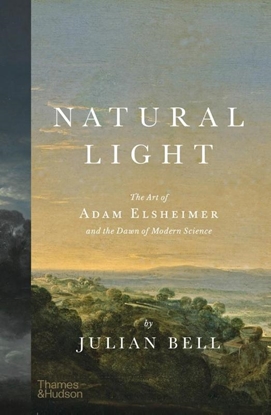
Natural Light
Seventeenth-century Europe swirled with conjectures and debates over what was real and what constituted “nature,” currents that would soon gather force to form modern science.
Natural Light deliberates on the era’s uncertainties, as distilled in the work of long underappreciated artist Adam Elsheimer (1578–1610), a native of Frankfurt who settled in Rome and whose diminutive and mysterious narrative compositions related figures to landscape in new ways, projecting unfamiliar visions of space at a time when Caravaggio was polarizing audiences with his radical altarpieces and early modern scientists were starting to turn to the new “world system” of Galileo. His visual inventions influenced many famous artists—including Rembrandt van Rijn, Claude Lorrain, and Nicolas Poussin.
Julian Bell guides the reader through key Elsheimer artworks, examining the contexts behind them before exploring the new imaginative thoughts that opened up in their wake. He also explores the experiences of Elsheimer and other Northern artists in the literary, artistic, and scientific culture of 1600s Rome.
Although his life was tragically short, Elsheimer’s legacy endured and prints of his work were widely spread throughout Europe, with his influence extending as far as the Indian subcontinent.
Lees meer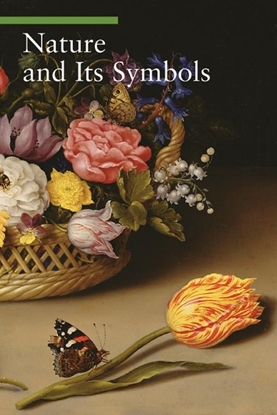
Nature and its Symbols


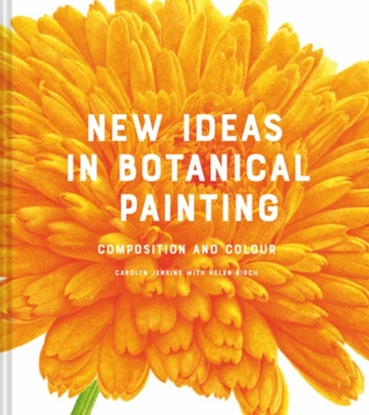
New Ideas in Botanical Painting
The first part of this book – Botanical: Grow – explores time well-spent in the garden and covers much of the traditional details of botanical painting, from observation to capturing light, colour and texture. The second part – Contemporary: Paint – explores how Carolyn works with photography, using the computer to help with crop and composition, achieving maximum impact and creating luminous paintings that shine from the page. Her stunning illustrations are full of vibrant colour, and her larger-than-life artworks have gained an enthusiastic following on Instagram.
This practical guide contains all the techniques and practice you need to create beautiful botanical art, plus step-by-step photography, crop, composition and photoshop demonstrations, to bring luminous colours, textures and impact to your own work. Lees meer
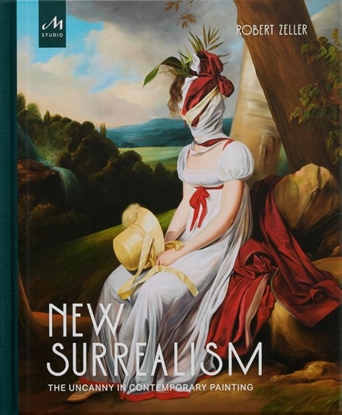
New Surrealism
New Surrealism: The Uncanny in Contemporary Painting by Robert Zeller offers a sweeping exposition of both historical Surrealism and its legacy in the world of contemporary art
Lees meer